Posts

Showing posts with the label Pipe Flanges

A Comprehensive Guide to Selecting Pipe Flanges for Engineers

Image
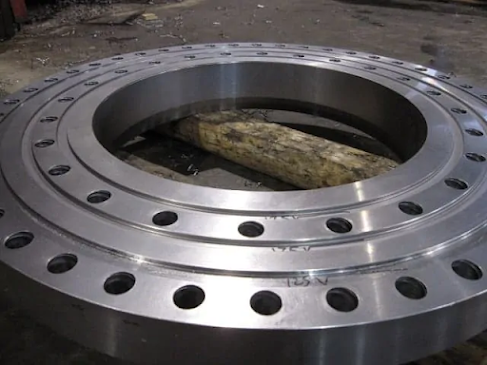
Choosing the right type of   pipe flange , is critical for any engineer who represents the industry. Although flanges are mostly common in connecting pipes, valves, pumps, and other systems they also ensure a smooth flow of the process fluid. In this guide, there is all that one is ever likely to need in order to make a right decision on Pipe Flanges. What Are Pipe Flanges? Pipe flanges are critical assembling pieces through which pipes, valves, pumps, and other equipment get connected in a pipeline system. They produce a well-sealed seal that does not allow any fluid passage or mixture with other fluids, which makes it convenient during maintenance, inspection, or future modifications. A flange is either welded or screwed to the pipe so as to be able to provide secure and steadfast support. Depending on the type, flanges are useful in various industrial, commercial, and residential applications of pipes and pipelines. Types of Pipe Flanges There are several types of pipe flanges, ...

Pipe Flanges for Diverse Oil and Gas Applications

Image
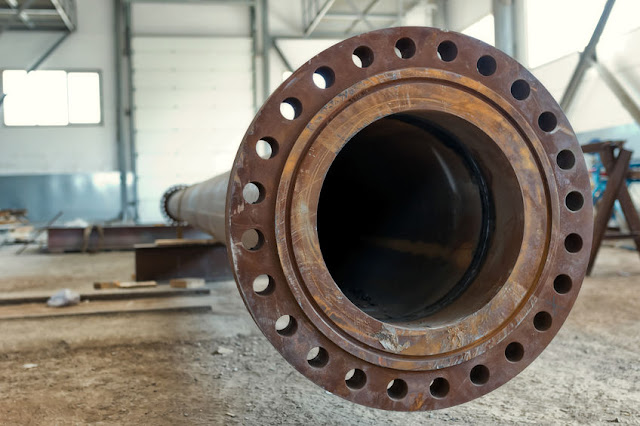
In the world of pipes and tubes, there’s something important called “ pipe flanges .” They may not be the first thing you think about, but they are important in the oil and gas industry. These little connectors do a big job by keeping things connected. In this blog, we’ll talk about the five most essential pipe flanges used in the oil and gas industry. What are pipe flanges? Before we dive into the top pipe flanges, let’s start with the basics. Pipe flanges are like the connectors in a giant jigsaw puzzle of pipes. They are flat, round discs with holes in the middle. These holes allow pipes to pass through and get connected. Picture them as the links between different segments of pipes, ensuring a secure and leak-free connection. Why choosing the right pipe flange matters Selecting the right pipe flange might seem like a small decision, but it’s critical for a few reasons: Safety: Oil and gas operations deal with extreme pressures and temperatures. Using the wrong flange can lead to ca...

Plate flange vs Slip-on Flange

Image
There are many kinds of flanges available in the market like blind flanges , butt weld flanges, slip-on flanges, weld neck flanges, and more. Here in this blog, we’ll discuss slip-on vs. plate flanges. Meaning of plate flanges Plate flange is a circular, flat disc welded to the pipe’s end. It enables the flange to be bolted to another pipe. It is often referred to as the flange slip, plane flange, flat flange, etc. Two plate flanges can be bolted together with a gasket in between them, usually used in water and fuel pipelines. The pipe length is not always known while constructing a pipeline. The plates may also be welded with a slight bias to the shaft, allowing the two pipes not to match up and join. Plate flanges come with a notched finish on the inner mating surface that allows the plate to fit within the gasket material. In any given dimension, plate flange designs are standardized, apart from the materials used to manufacture them. It ensures that the fit is exactly like a 6-inc...

5 Qualities of Excellent Pipe Flanges

Image
Pipe flanges offer a reliable way to connect pipe systems with various valves, equipment, and other components of virtually any processing system, flanges are the second most used joining method after welding. Pipe flange is an essential part of any pipeline system and needs to be high-quality to meet the demanding environment these forged components live in. Pipe flanges come with excellent qualities. Here are 5 of them: Customizable Pipe flanges are customizable as per the needs. The reason is that all the flanges act as a connection between the two pipes. The varieties and functions of pipes for each of them are nearly endless. They need to be able to be customized for the required purpose. Available in different sizes and shapes Pipe flanges are helpful in many industries in different ways. They need to be able to shape in various shapes and sizes, necessary to meet the needs of the functions and industries that they perform. Durable Flanges are used under some of ...

Effect of Temperature on Bolted Flange Assemblies

Image
Bolted flange assemblies are helpful to connect widely with different elements of the pipelines and pressure vessels. They carry process media at temperatures that vary from cryogenic to more than 1000°C. Thermal transitions and high temperatures play a vital role in the tightness of bolted flange assemblies. We can quickly encounter the unfulfilled tightness that may occur due to thermal effects. It becomes easier if the assembled components (gaskets, bolts, and flanges) are in limits, and do not undergo mechanical failure. Characterize the temperature effects The temperature during the process is bound to rise. It demands the improvement in the chemical efficiency that drives the process. It is why; components like gaskets must be able to withstand the increase very quickly. Characterizing the temperature effects on the flange bolting assemblies will always remain a crucial issue. Not only for the end-users but also for the designers as it involves complex physical laws. The reason ...

Finding the Right Pipe Flange for Your Project

Image
There are numerous essential variables purchasers ought to consider when picking pipe fittings. The materials used to construct a pipe fitting helps identify how the fitting will connect to the pipes and the pressure it can handle. Therefore, it's imperative to choose the right pipe fittings for the project despite their size. To fix the right pipe system, you should know the different types of fittings available and their properties. Here are flange fittings that can help you find a solution. Knowing the Different Types Will Help to Find the Right Pipe Flange: 1. Threaded flanges 2. Blind Flanges 3. Alloy pipe flanges Threaded flanges: These types of flanges are used in low-pressure systems. The most mainstream threaded flanges range in ½ inch to 6" standard size, yet many offer NPT threaded flanges up to 24" if necessary. These flanges are not suitable for welding temperature, which is more than 260 ℃and less than -45 ℃ of the pipeline.             ...

Flange Installation Guidelines

Image
What to look at before beginning the installation? Accessories or connections for the flange: Properly introduced flanged connections give progress fitting to join substitute funneling materials, a mechanical way to interface with valves and other hardware, and join channeling frameworks where continuous destroying might be required. The notched substance of the flange gives a fluid-tight seal on the gasket when flanges are appropriately gathered, upheld, and legitimate torque is applied to the bolts. Gaskets: Full face 1/8" thick elastomeric material with a Shore A Durometer hardness of 50-70; gasket material is chosen should be viable with application and liquids passed on. Varieties in a gasket material and shore hardness may influence the fixing torque required. Dimensions of the flange :   Dimensions are more than after according to the ANSI Flange dimensions . Flange ring bolt opening dimensions adjust to ANSI B 16.5 Class 150 bolt design. Strung flange center points ...

5 Common Valve Types Every Oil and Gas Engineer Should Know About

Image
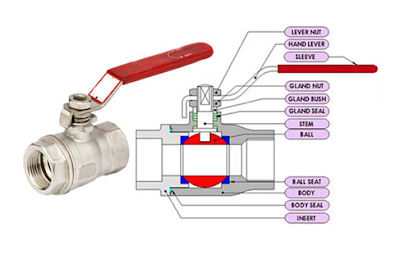
A valve is a mechanical device in a piping system used to control the flow and pressure of contents – liquid, oil, vapors, or gas. Here is a list of 5  standard valves that every oil and gas engineer should know: #1. Ball valves It's a rotary motion quarter-turn valve. It uses a ball-shaped disk to control the flow of components flowing in the piping system. When you open the valve, the ball's holes come in line with the body inlet, allowing contents to pass. The ball valves can withstand a temperature between - 200 deg C and as high as 500 deg C. the best thing about this valve is that it’s a quick-acting type. Some of the different types of ball valves include: ·           Floating ·          Trunnion Mounted ·          3 Way ·          Top entry ·          Side en...