Posts

Showing posts with the label flanges

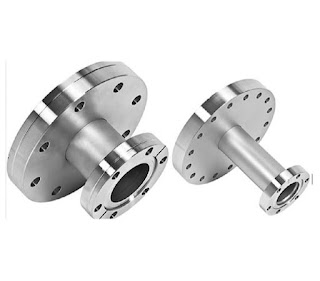
Factors To Consider When Selecting A Reducing Flange
Image
Reducing flange is one more crucial component that one should choose very carefully, as it is used in all the elements in industrial piping systems. Flanges minimize the significance of pipes’ sizes by linking pipes of varying diameters, managing the flow, and sealing potential leakage. However, when it comes to selection, the situation changes; in fact, when there are so many options available, it becomes a time-consuming and tiring job. This guide gives essential information on choosing the correct reducing flange and avoiding some possible troubles in using this component. It provides valuable information about the sizing and compatibility of piping materials and the influential factors that define the cost of the project, as well as some useful tips that might be helpful for engineers, project managers, and maintenance staff. Understanding Reducing Flange Expansions or reducers are pipeline components used when connecting pipes of dissimilar diameters where flanges are necessary a...

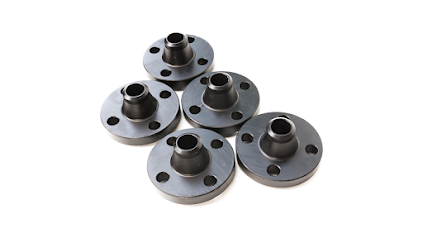
Differences Between Forged and Cast Carbon Steel Flanges

Image
Flanges are necessary for connecting pipes, valves, pumps, and other equipment in various piping systems. Before comparing the forged carbon steel flanges and the cast carbon steel flanges, it is crucial to understand which of the two   flanges   to use in the project. All of them have their strengths and weaknesses, and the result, safety, and cost of the project will depend on the option selected. Here is a detailed comparison between them. What are Forged Carbon Steel Flanges? Forged carbon steel flanges get ready through a process called forging. In this process, carbon steel is heated to a high temperature until it becomes soft. The steel is then shaped using pressure, either by hammering, pressing, or rolling. This process makes the steel stronger and more durable. Key Features of Forged Flanges Strength The process of forging used to manufacture these flanges is one that makes them incredibly strong. They can work under pressure and do not get stressed easily; hence, th...

Key Advantages of Forged Flanges in the Oil and Gas Sector

Image
In the oil and gas industry, the reliability and durability of components are critical. Forged flanges stand out as a superior choice due to their robustness and high performance. These flanges, created through the forging process, exhibit enhanced mechanical properties, making them ideal for high-pressure and high-temperature applications common in the oil and gas sector. Forged flanges offer exceptional strength and resistance to fatigue, reducing the risk of leaks and failures. Their uniform grain structure ensures better durability and longevity compared to cast flanges. Additionally, forged flanges are less likely to have defects such as porosity or inclusions, which can compromise the integrity of the connection. The precise manufacturing process of forging results in flanges with excellent dimensional accuracy and smoother surfaces, ensuring tight seals and reliable connections. This reliability translates to safer operations and lower maintenance costs, essential factors for th...

Demystifying Orifice Flanges: Exploring the Fundamentals

Image
Are you curious about those metal rings with holes you see in industrial settings? Wonder no more! Orifice flanges may seem mysterious, but they’re crucial components in many industries. Simply put, they’re specialized fittings used to measure and control fluid flow. From oil refineries to chemical plants, orifice flanges are vital in ensuring smooth operations. In this guide, we’ll unravel the basics of orifice flanges in a way that’s easy to understand. Get ready to dive into the world of  flanges  and discover their significance in industrial applications! What Are Orifice Flanges? Think to yourself: you’re the engineer of water flow all the way through the pipe. You need a valve to do this. However, how do you measure the water flow as well? This is where the orifice flanges do their job. The orifice flange is like special fittings that connect to pipes. It has a small hole in the center named the orifice. This entrance allows for measuring the flow of air or water in the ...

A Comprehensive Guide To JIS Flanges

Image
JIS flanges, a Japanese Industrial Standards’ accreditation, enable the connection between pipes and valves in various industries. This in-depth hardware guide will be informative to you as it is used all over the world in the oil and gas industry, water treatment, and manufacturing. JIS flanges are important for ensuring things are safe and work well. They follow specific rules to make sure they seal tightly and hold things together firmly. This is super important for keeping everything running smoothly and safely. Regardless of whether you are a professional engineer or a novice in the field, it is imperative to know the types, materials, and applications of   JIS flanges . This guide will explore the basics, including the definitions and types of installation instructions; this will help you effectively select and use JIS flanges for your projects. Let’s go into the details of their functions and applications. Understanding JIS Flanges JIS flanges are components that allow conne...